
Hope everybody’s week was awesome!
This week I’ve got the reason I keep telling you an AI side hustle is worth starting, backed by Stripe’s own numbers, the plain-English reason Google killed SEO and what to do about it, a new survey on how many people are already asking AI about their health, and the part of the Claude watermark story that people online are getting badly wrong.
Let’s get into it.
- Solopreneurs hitting $1M just doubled
- Google killed SEO. AI SEO is what replaced it.
- A third of Americans now ask AI about their health
- What everyone's getting wrong about Claude's watermark
- Excel can now tell human edits from AI edits
- Anthropic just beat the Pentagon in court
- Meta's AI glasses stop recording if you cover the light
💸 This is happening
Solopreneurs Hitting $1M Just Doubled
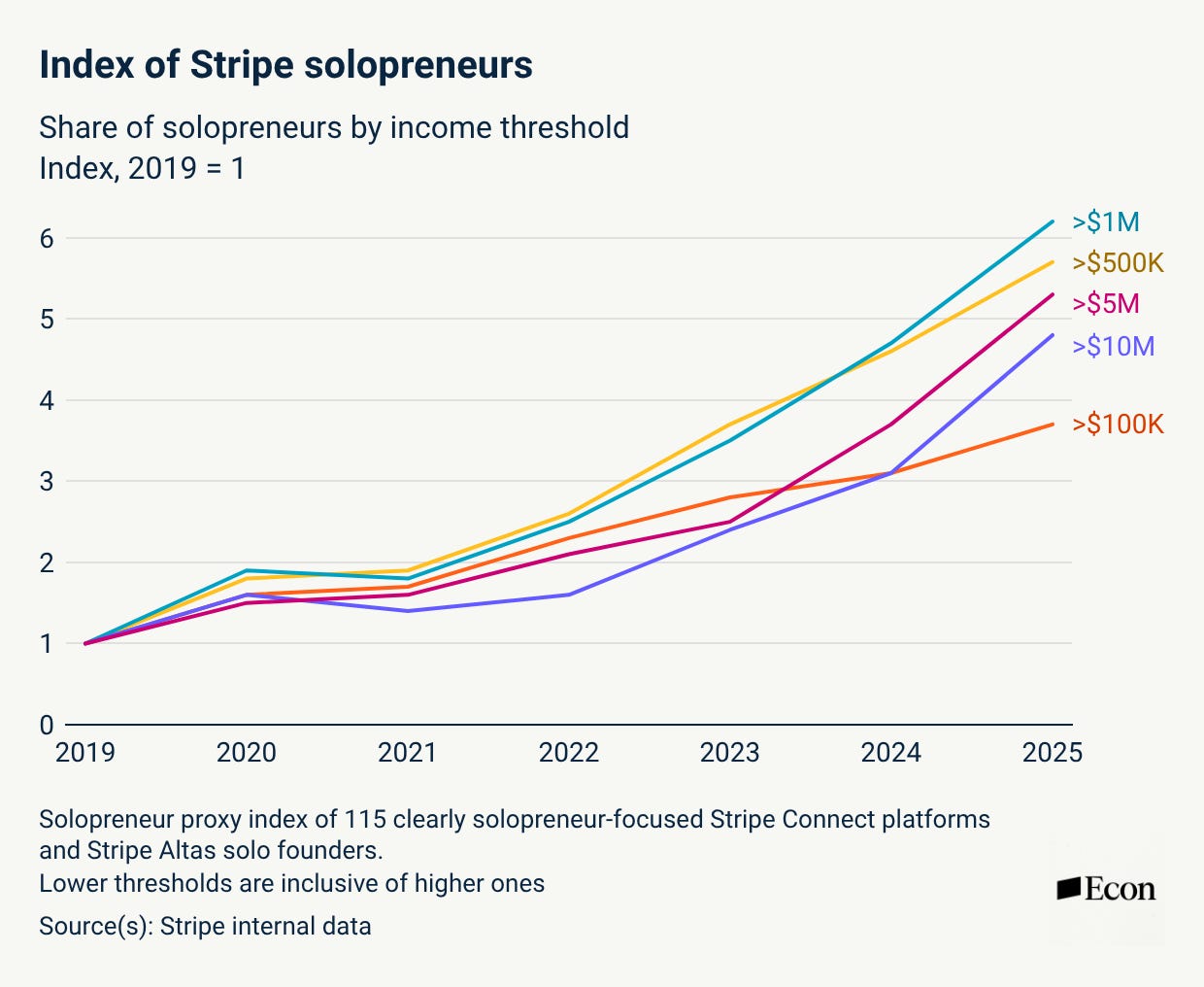
If you’ve been thinking about starting something on the side with AI, this is the data I’d want you to see first. Stripe’s economists put out a report in June called “The Age of the Solopreneur,” and one line in it stopped me cold. More than twice as many one-person businesses made over a million dollars in 2025 than in 2023. Not agencies. Not startups with a team. One person.
Their explanation is simple. AI is now doing the jobs a solo business used to hire for first. The assistant who drafts the proposal. The marketing help who turns one idea into a week of emails. The agency that rewrites your listing so it actually sells. Those were the first three hires, and they’re the first three things AI got good at.
Here’s what I find interesting. The growth isn’t happening at the bottom. The share of solopreneurs earning $100K barely moved. It’s the million-dollar line that bent upward, starting right around 2022. The tools didn’t help people scrape by. They helped people who were already good at one thing stop being slowed down by everything else. That’s the whole case for a side hustle right now. You don’t need to be good at ten things anymore. You need to be good at one.
So I built those three hires as three Claude setups. The proposal drafter, the course-to-campaign builder, the listing rewriter. Full prompts, what to gather before you start, and how to save each one so it’s a single message every time after that. If you sell anything by yourself, or want to, one of the three is for you.
🔍 Read this before you pay for SEO again
Google Killed SEO. AI SEO Is What Replaced It.
If you’ve been paying for SEO, or grinding on it yourself, and the traffic quietly stopped showing up anyway, you didn’t do anything wrong. The thing you were optimizing for changed underneath you.
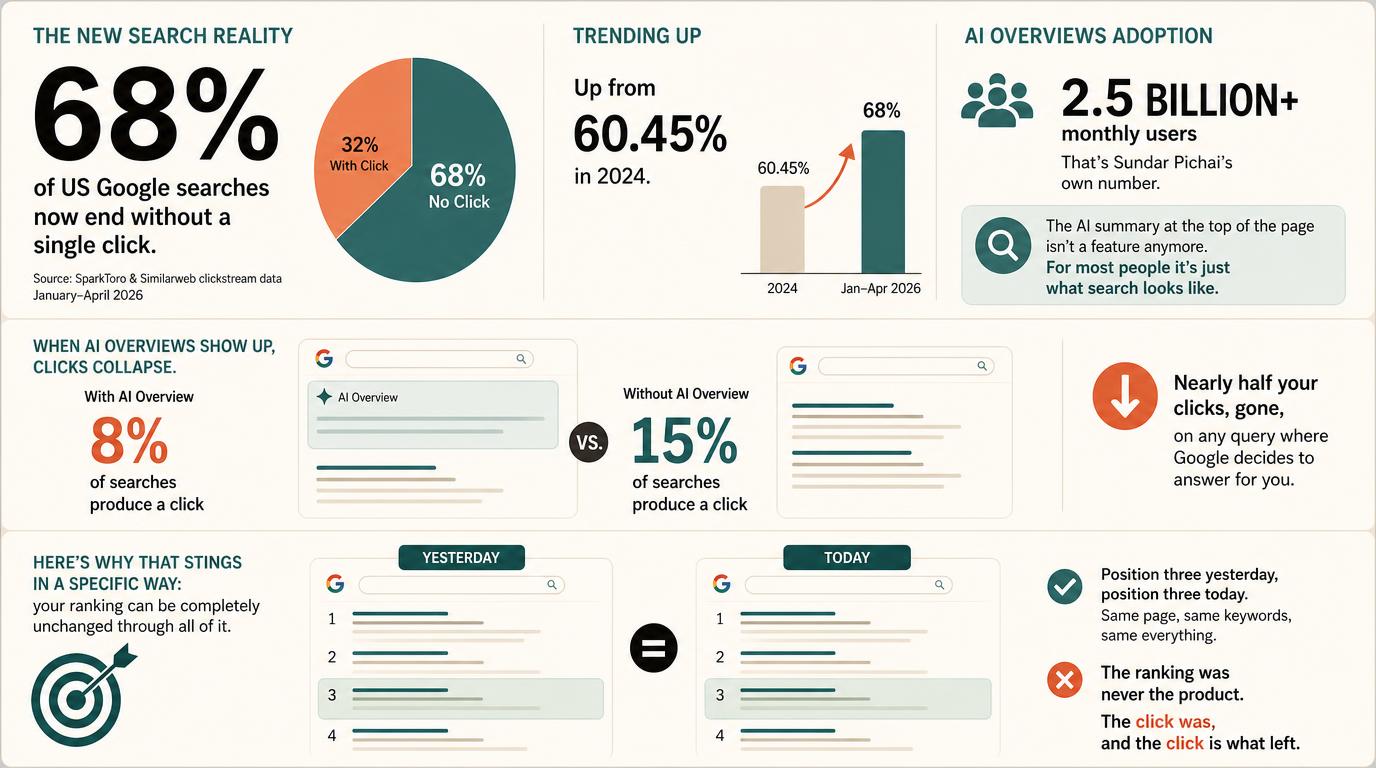
Three numbers explain it. About 68% of Google searches in the US now end without a single click. AI Overviews, that summary at the top of the page, just passed 2.5 billion monthly users, which is Google’s own number. And when that summary shows up, clicks on the results below it drop by roughly half.
The part that stings is that your ranking can be completely unchanged through all of it. Position three last year, position three today. The ranking was never the product. The click was, and the click is what left.
The good news is the fix isn’t a new skill and it isn’t code. AI doesn’t invent answers, it digests what’s already written and assembles an answer out of it. Somebody is already the answer for what you sell. Some page, some review roundup, some Reddit thread. The whole job now is getting into that material, and I wrote up the seven moves that do it, in order, plus how to check if any of it worked.
📚 AI news
A Third of Americans Now Ask AI About Their Health

Pew Research surveyed 3,488 US adults in late June and published the results this week. 34% have used an AI chatbot for at least one health reason. The top uses were getting health information fast (28%), figuring out what’s causing symptoms (25%), and understanding what a doctor actually said about a diagnosis (22%). One in five have pasted in lab results to have them explained.
Two things jumped out at me.
First, people like it. 47% called the answers extremely or very helpful, and almost everyone else said somewhat helpful. Almost nobody said it was useless. The “understand what my doctor said” use is the one people are quietly grateful for, because a 12-minute appointment doesn’t leave much room for questions.
Second, they don’t fully trust it with their data. Only 29% said they’re very comfortable sharing personal health information with these tools. So a third of the country is using AI for health and most of them are a little uneasy about it at the same time. That’s a completely reasonable place to be.
My take: this is the right use and the wrong setup for most people. Paste in the lab result, ask what each line means and what questions to bring to your next appointment. Don’t ask it whether to skip the appointment. And if you’re going to do it, use a temporary chat with nothing about you saved. It takes one click and it fixes the part everybody’s uneasy about.
👀 What people are getting wrong
Claude’s Watermark Is Real. The Panic Isn’t.
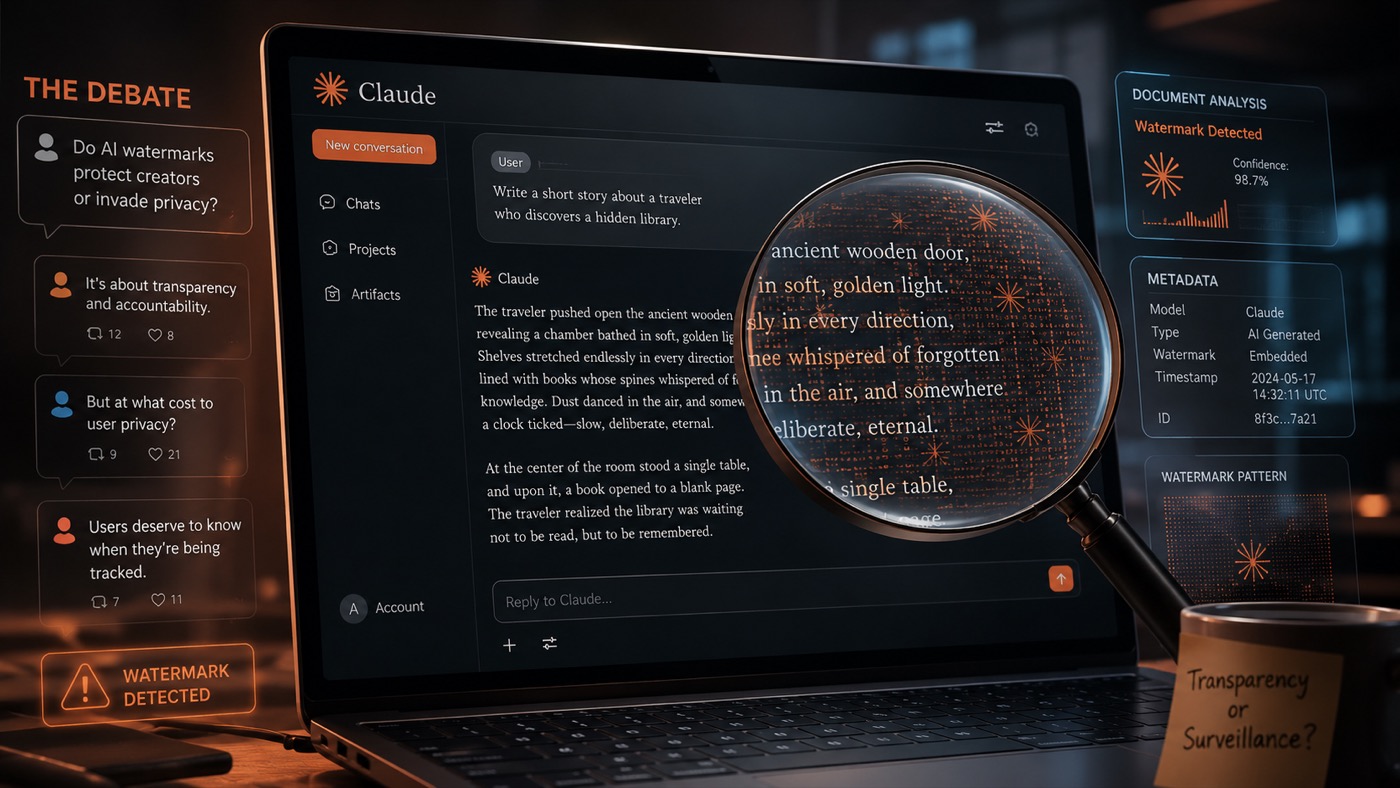
Since early August, everything Claude writes carries an invisible mark. Not a label at the bottom you can delete. Not hidden data in the file. It’s built into the word choices themselves, so it rides along when you copy and paste, and it survives light editing. It’s on every new model, they’re adding it to the older ones by December, and it’s on every Claude product, everywhere in the world, not just in Europe where the law that caused it lives.
Now here’s the part people are getting badly wrong. There is no detector. Not for teachers, not for bosses, not for clients, not for anyone. Anthropic says the tools to read the mark are coming and hasn’t said when. So nobody can run your writing through anything today and get an answer, and every “98% AI detected” screenshot going around right now is from a tool that cannot see this mark at all.
And when a detector does land, it’ll be blunter than it sounds. Rewriting the text in your own words breaks the mark. So does paraphrasing it, translating it, or writing something short. Anthropic also says finding the mark doesn’t prove Claude wrote the thing, because plenty of people write something themselves and hand it over to tidy up. It’s a signal, not a verdict.
I’ll say the awkward part out loud, because I spend a lot of time teaching you how to make AI writing sound like you. Am I contradicting myself? I don’t think so. I teach that because raw AI output sounds like everyone else’s raw AI output, and because the detectors that already exist are wrong constantly and have gotten real people in real trouble over work they actually wrote. A company being honest about what its own model produced is a different thing. What I’ll be watching is what people do once the detector exists, because “AI touched this” is going to get treated as “this person cheated,” and those are not the same sentence.
The move for you hasn’t changed. Use AI to think and to draft. Then rewrite it in your own voice so it sounds like you. That was always the point, and now it’s also the free way to remove the mark. The full guide covers how the mark is actually built, what it can and can’t prove, the one part of the law that applies to you and not to Anthropic, and what students need to know about false accusations.
⚡ Worth your five minutes
Three real things I came across this week that were worth more than a scroll-past.
1. Excel can now tell you which edits were made by a person and which were made by AI. Microsoft’s August update gave Copilot in Excel a change history skill. Ask it what changed in a workbook and it summarizes the recent edits, names who made them, separates the human changes from the AI ones, and can roll a broken formula back to the last version that worked. If you’ve ever opened a shared spreadsheet and wondered who touched what, this is the fix, and it’s on Windows, Mac, and the web. See what’s new in Excel →
2. Anthropic just beat the Pentagon in court. Back in February the Defense Department labeled Anthropic a supply chain risk after the company refused to let Claude be used for mass surveillance and fully autonomous weapons. On Thursday a federal judge ruled that label illegal, and said the government was punishing a critic. Whatever you think of the politics, the company that makes Claude took a real financial hit to hold a line on how its AI gets used, and a court just said it was right to. Read the TechCrunch story →
3. Meta’s AI glasses will now stop recording if you cover the light. The glasses have a small LED that turns on while they record, so people around you know. Some owners were starting a recording and then covering the light with a finger or tape. A new update kills the camera the moment the light is blocked. Good to know if you wear them, and good to know if you’re the one being filmed: no light, no recording. Read the Engadget story →
💛 One more thing
Everything I Make Is Free, On Purpose
I started all of this because I wanted to learn AI and couldn’t find anyone explaining it in plain English. So that’s what I do now, for anyone who wants it. Every guide on my site is free, and each one goes deeper than a video ever could, with the exact prompts, the steps, and the parts that trip people up. Go check them out. They’re genuinely helpful, and I’d love for them to be helpful to you.
And if this email made something click, share it. Forward it to a friend, send them a guide, tell them where you found it. That’s how more people get to learn this stuff, and that’s the whole point.
That’s this week. If one of these actually helped, hit reply and tell me, I read every single one.
Talk soon, Kelly